
Tel/WA:
Tel/WA:

China's Commercial and Industrial Energy Storage: Current Status, Trends and Challenges
As China advances its "dual carbon" goals and deepens the reform of the power market, commercial and industrial (C&I) energy storage has emerged as a crucial pillar in the new power system. Deployed behind the meter of enterprises, industrial parks and commercial buildings, it serves as a "power manager" for businesses, balancing electricity costs, ensuring power supply stability and promoting renewable energy consumption. After years of explosive growth driven by policy dividends and market demand, China's C&I energy storage is now entering a critical transition period toward market-driven, high-quality development. This article explores its current status, core values, emerging trends and existing challenges, all within 1500 words.
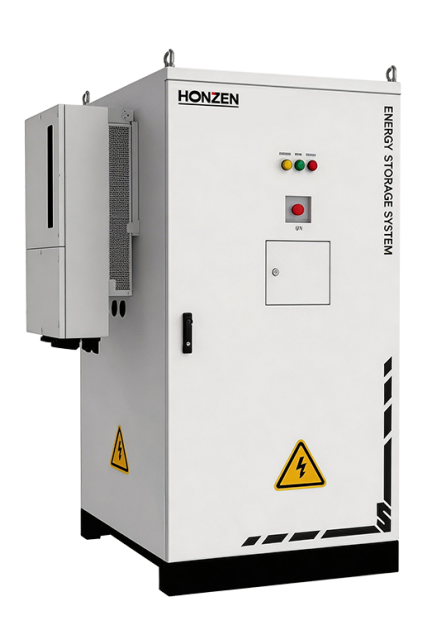
China's C&I energy storage market has achieved remarkable growth in recent years, with expanding scale and improving maturity. Data from the China Energy Storage Association (CNESA) shows that by the end of 2025, China's new energy storage installed capacity reached 144.7GW, a year-on-year increase of 85%, and C&I energy storage contributed 10.5GWh of new installations, growing by 40% year-on-year. Geographically, Jiangsu, Guangdong and Anhui provinces have become core growth poles, accounting for a large proportion of national projects, while regions with abundant renewable energy resources are accelerating their layout. In terms of scale, C&I energy storage systems typically range from 10kW to 10MW in power and 100kWh to several MWh in capacity, featuring modular design that allows flexible expansion and easy installation in factory workshops or industrial park corners.
The core value of C&I energy storage lies in helping businesses reduce costs and ensure stable power supply, with peak-valley arbitrage as its primary profit model. Thanks to the time-of-use electricity price policy implemented in most regions of China, where the average peak-valley price difference reached over 0.6 yuan/kWh in 18 provinces, enterprises can charge energy storage systems during off-peak hours (such as at night) and discharge during peak hours (such as daytime production), directly reducing electricity expenses. In high-price-difference regions like Jiangsu, high-quality projects can achieve an internal rate of return (IRR) of over 15%, with an investment payback period shortened to 3-5 years. Additionally, it helps enterprises manage maximum demand, reducing basic electricity fees, and provides uninterrupted power supply for critical loads such as production lines and data centers in case of grid failures, avoiding huge losses from shutdowns.
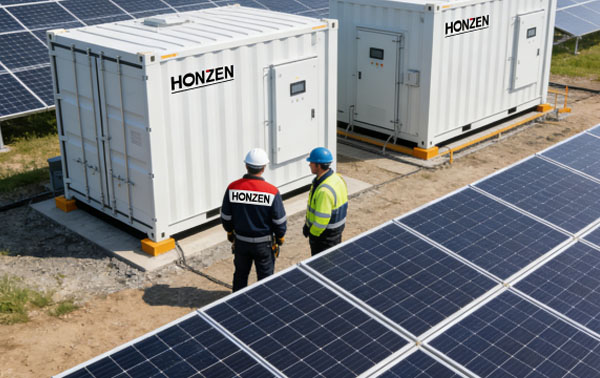
Policy adjustments and market reforms are reshaping the development pattern of China's C&I energy storage. Since 2026, 31 provinces across the country have fully abolished the mandatory energy storage supporting policy for new energy projects, shifting to a market-oriented leasing model, which has pushed the industry from "policy-driven" to "market-driven" development. At the national level, the implementation of the "Basic Rules for the Medium and Long-Term Power Market" has allowed C&I users participating in market transactions to adopt real-time fluctuating peak-valley prices, ending the traditional single peak-valley arbitrage model and forcing the industry to enhance forecasting and transaction capabilities. Meanwhile, local governments have introduced supportive policies, with 9 provinces launching capacity electricity prices for independent energy storage, providing additional profit channels for C&I energy storage projects.
Technological innovation is a key driver of high-quality development in C&I energy storage. Lithium iron phosphate batteries remain the mainstream technology, with large-capacity cells (587Ah and above) mass-produced, reducing system costs to below 0.4 yuan/Wh. Sodium-ion batteries, with a cost 15%-20% lower than lithium iron phosphate batteries, are expected to achieve 10GWh-level production capacity in 2026, adapting to low-temperature and off-grid C&I scenarios. Long-duration energy storage technologies are also accelerating their landing: vanadium redox flow batteries, with a cycle life exceeding 20,000 times, are increasingly applied in high-energy-consuming industries that require continuous power supply, while their system efficiency has reached 78% in demonstration projects. In addition, the integration of digital twin technology and energy management systems (EMS) has optimized operational efficiency, reducing maintenance costs by 30% and increasing battery available capacity by 15% in pilot projects.
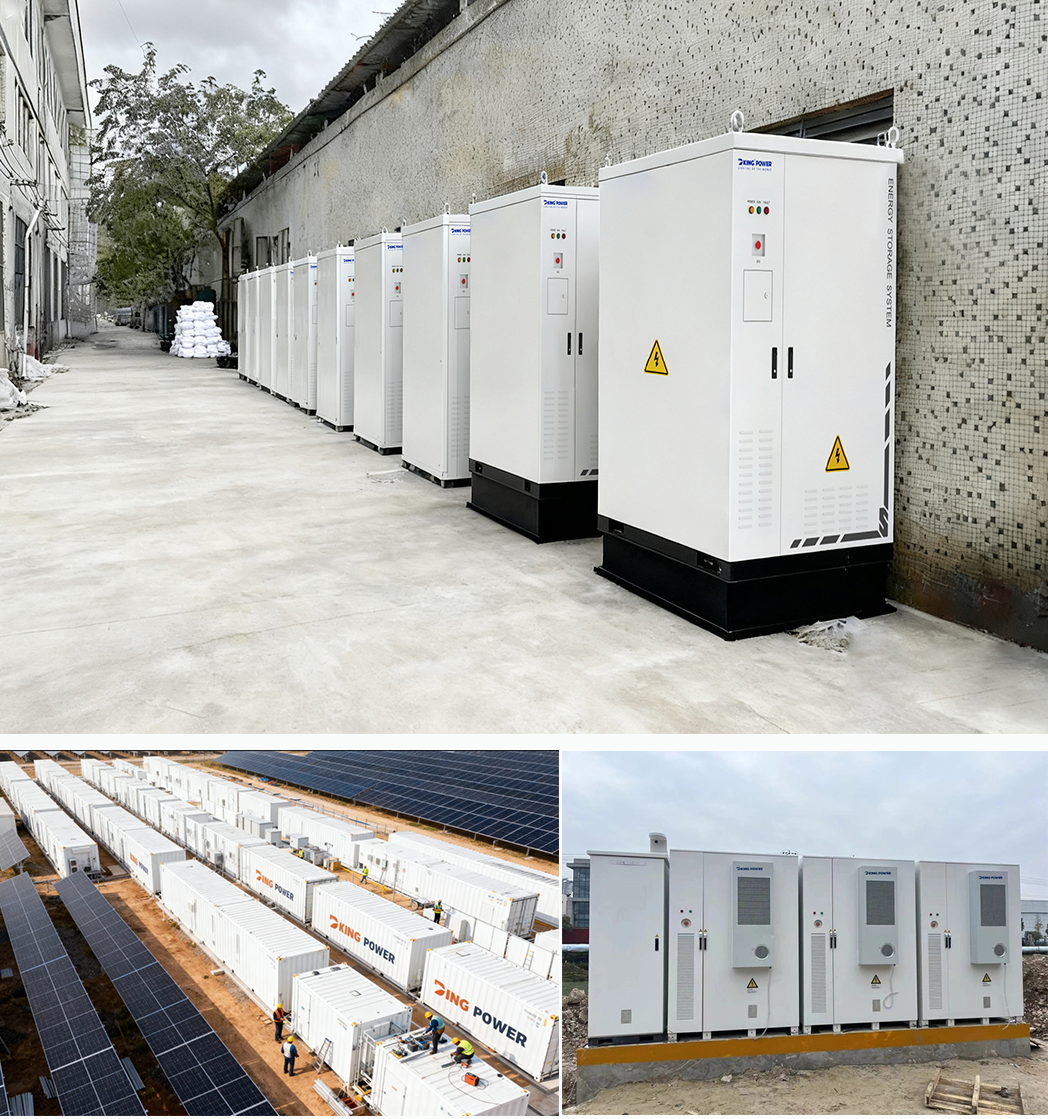
Despite its rapid development, China's C&I energy storage faces three core challenges in the transition period. First, policy subsidy withdrawal has impacted the profit foundation. With the reduction of universal subsidies and the adjustment of peak-valley time slots in some provinces, the profit space of peak-valley arbitrage has narrowed by 27.4% compared with 2024, and some projects are approaching the investment return threshold. Second, market saturation and overcapacity have intensified competition. By 2025, China's C&I energy storage capacity has reached 120GWh, while actual demand is only 80GWh, with an overcapacity rate exceeding 30%, leading to a continuous decline in system prices. Third, technological homogeneity and talent shortage exist. Many enterprises are trapped in a vicious cycle of "cost reduction - low-price competition - profit decline", and the lack of rural and industrial technical talents hinders the promotion of intelligent technologies.
Looking ahead, China's C&I energy storage will embrace three key development trends. First, long-duration energy storage will scale up, with the proportion of projects with a duration of more than 4 hours expected to increase from 12% to 35% by 2030, supported by policy inclination and cost reduction. Second, profit models will become diversified, integrating capacity leasing, auxiliary services and carbon trading. Energy storage projects can convert green power consumption into carbon emission reductions to participate in carbon trading, creating additional revenue. Third, integration with renewable energy will deepen, with more C&I projects combining distributed photovoltaic and energy storage to improve the self-consumption rate of green power and avoid losses from surplus power grid connection.
As a mature commercial track in the energy storage industry, China's C&I energy storage plays an irreplaceable role in promoting energy conservation and emission reduction, ensuring industrial power supply and advancing the clean energy transition. Despite facing transition pains such as policy adjustments and market competition, its development prospects remain broad with the support of technological innovation and policy optimization. With continuous breakthroughs in core technologies, improvement of market mechanisms and innovation of business models, China's C&I energy storage will surely transform from a "cost center" to a "profit engine", making greater contributions to the construction of a clean, low-carbon, safe and efficient energy system.
HONZEN TECH

WeChat QR code
WeChat ID:15366425298