
Tel/WA:
Tel/WA:

Agrivoltaics: Bridging Renewable Energy and Sustainable Agriculture
In an era marked by growing concerns over climate change, food security, and land scarcity, agrivoltaics—also known as agrophotovoltaics, agrisolar, or dual-use solar—has emerged as an innovative solution that harmonizes two critical global needs: renewable energy production and agricultural productivity. Conceived in 1981 by Adolf Goetz Berger and Armin Zastrow, this technology integrates solar photovoltaic (PV) systems with agricultural activities, enabling the dual use of land to generate both electricity and crops, livestock, or other agricultural products. By resolving the long-standing conflict between land for energy and land for food, agrivoltaics offers a path toward a more sustainable and resilient future.
At its core, agrivoltaics leverages the complementary relationship between solar energy and agriculture. Solar panels are typically installed either elevated above farmland (usually 5 meters high to allow farm machinery access), interleaved between crops, or on the roofs of greenhouses, creating a synergistic system that benefits both energy and agricultural outputs. The partial shade provided by the panels modifies the microclimate beneath them, reducing daytime temperatures, increasing soil moisture retention, and lowering evaporation rates—advantages that are particularly valuable in arid and semi-arid regions. For example, fish-solar complementary projects in China have been shown to reduce water evaporation by 30% while achieving a power density of 1.6 MW per hectare of water surface.
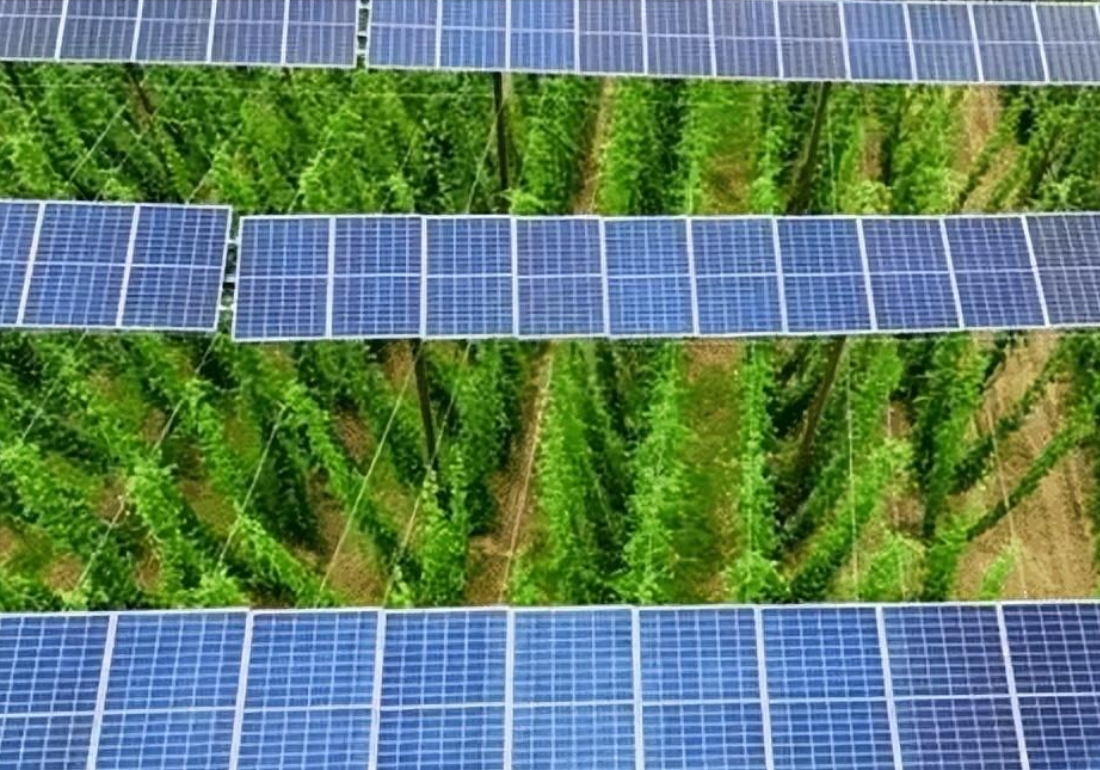
The benefits of agrivoltaics extend across environmental, economic, and social dimensions. Environmentally, it contributes to climate change mitigation by generating clean, renewable energy that displaces fossil fuel use, thereby reducing greenhouse gas emissions. Unlike conventional ground-mounted PV systems, which often require soil grading and herbicide use that harm soil health, well-designed agrivoltaic projects can preserve native habitats, support pollinators, and improve stormwater management by enhancing soil permeability. In arid regions like northern China, agrivoltaics has also been used to stabilize soils, increase vegetation cover, and curb desertification, demonstrating its ecological versatility.
Economically, agrivoltaics provides a diversified income stream for farmers, helping them mitigate risks associated with volatile crop prices and climate variability. Farmers can earn revenue from both crop yields and solar energy sales, while also reducing their own energy costs by using the electricity generated on-site. Additionally, agrivoltaic systems can increase land productivity by up to 70% compared to single-use land, making it a valuable option for densely populated regions or areas with limited arable land. For rural communities, especially in developing areas, agrivoltaics can also improve access to decentralized, off-grid electricity, further boosting agricultural productivity and quality of life.
Globally, agrivoltaic deployment has grown rapidly, with diverse approaches tailored to regional agricultural conditions and energy goals. Japan leads with over 3,000 agrivoltaic projects, supported by feed-in tariffs and local subsidies, and requires farmers to preserve at least 80% of agricultural yields to prioritize the land’s agricultural role. In Europe, Germany has established clear technical standards (DIN Spec 91434) to ensure agricultural productivity alongside solar energy production, while Italy offers subsidies covering up to 40% of capital expenditures through its National Recovery and Resilience Plan. France emphasizes agronomic benefits, requiring projects to demonstrate ecological value and supporting them with 20-year feed-in tariffs via competitive tenders. The European Union (EU) has recognized agrivoltaics as a key tool to meet its 2030 solar energy goals—covering just 1% of the EU’s utilized agricultural area with agrivoltaics could generate approximately 944 GW DC of capacity, surpassing the EU’s target of 720 GW DC by 2030.
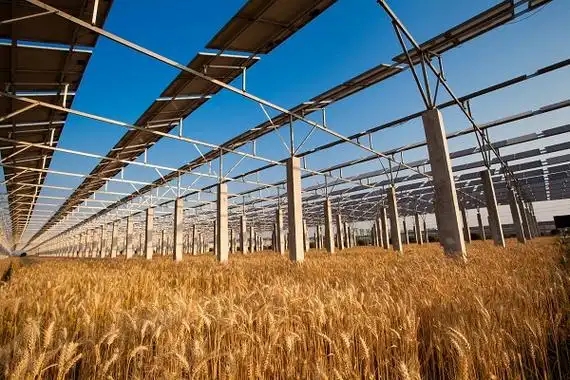
In China, the world’s leader in solar installed capacity (887 GW in 2024), agrivoltaics plays a crucial role in advancing the country’s “dual carbon” goals and rural revitalization strategy. However, China’s agrivoltaic development faces regional imbalances: Jiangsu, Zhejiang, and Anhui provinces account for 37.8% of national projects, while western regions with abundant solar resources (such as Xinjiang and Qinghai) have fewer projects, representing a missed opportunity. The United States, meanwhile, lacks a unified regulatory framework but supports agrivoltaics through federal tax credits, USDA programs, and state-level initiatives, with pilot projects in New Jersey and Colorado showcasing its potential for community solar and rural resilience.
Despite its promise, agrivoltaics faces several challenges that hinder widespread adoption. High upfront costs remain a major barrier—agrivoltaic systems are typically 30–50% more expensive than conventional ground-mounted PV due to elevated structures, specialized maintenance, and integration with agricultural practices. The return on investment can take 6–12 years for open-air systems and 8–15 years for光伏 greenhouses, discouraging small-scale farmers and limiting private investment. Technical bottlenecks also persist, including insufficient synergy between PV and agricultural design—for example, semi-transparent amorphous silicon thin-film PV greenhouses have a low photoelectric conversion efficiency of only 6%—and a shortage of rural technical talent.
Regulatory and ecological challenges further complicate adoption. In the EU, the lack of a harmonized definition of agrivoltaics creates uncertainty around land characterization, affecting eligibility for agricultural subsidies and taxation. Ecologically, large-scale PV installations in arid regions can damage native vegetation and degrade soil, as observed in Gansu Wuwei, where construction activities disrupted soil health and extended ecological recovery cycles. Additionally, balancing energy production and crop yields requires careful system design, as some crops (such as wheat, rice, and soybeans) need high sunlight and may experience reduced yields under partial shade, while others (like leafy vegetables, turmeric, and ginger) thrive in shaded conditions.
Looking ahead, the future of agrivoltaics depends on addressing these challenges through policy support, technological innovation, and stakeholder collaboration. Targeted financial incentives—such as subsidies, tax credits, and low-interest loans—can reduce upfront costs and attract investment. Technological advancements, including adjustable solar panels, spectral filtering techniques, and integrated modeling tools, will help optimize both energy output and crop yields by tailoring systems to local climate and crop types. Standardizing technical guidelines and harmonizing regulatory frameworks will also streamline project development and ensure agricultural productivity is prioritized alongside energy generation.
As the world strives to meet renewable energy targets while ensuring food security, agrivoltaics stands out as a transformative technology that aligns climate action with sustainable agriculture. By maximizing land use efficiency, diversifying rural economies, and enhancing ecological resilience, it offers a win-win solution for farmers, energy providers, and the planet. With continued investment, innovation, and policy support, agrivoltaics has the potential to reshape global land use practices, contribute to net-zero carbon footprints, and build a more sustainable future for generations to come.
HONZEN TECH

WeChat QR code
WeChat ID:15366425298